
Yesterday morning, a Meta API issue went global.
It silently broke lead automations across every major platform. Make, Zapier, n8n, all of them. If your business runs Meta lead ads into a CRM through any kind of automation, those leads were going nowhere. Falling into a void. Gone.
So. When did you find out?
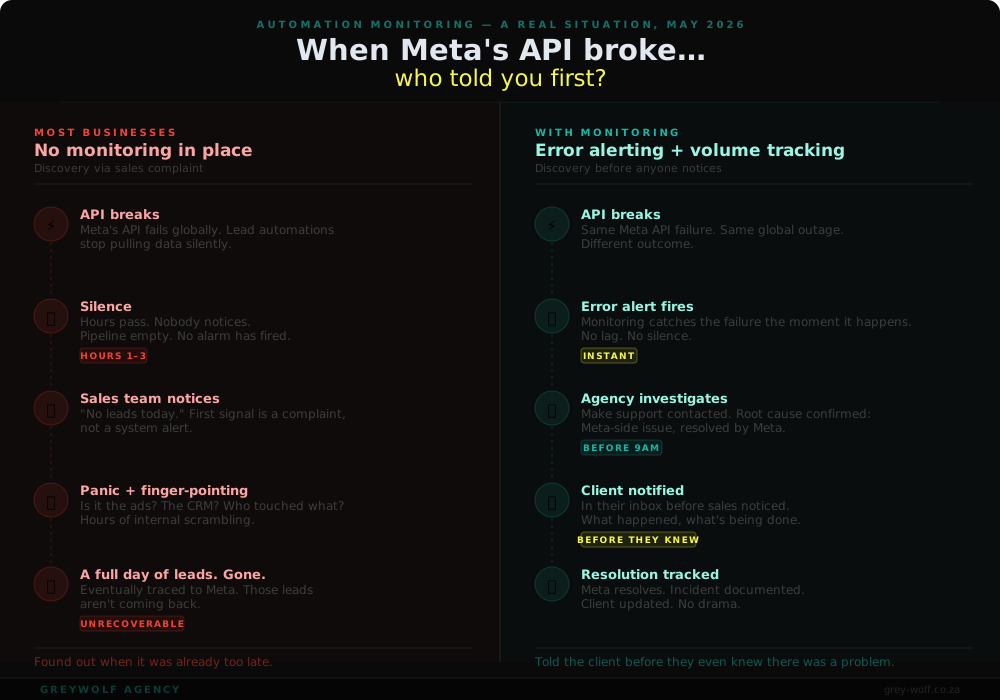
Here’s how most businesses discovered it.
Their sales team called. Or sent a Slack. Or walked over to someone’s desk with that look on their face. “We haven’t had any leads come through today.”
Then the panic starts. Is it the ads? The CRM? Did someone break something? Who touched what? Three hours of finger-pointing later, someone traces it to a global Meta API issue that’s been happening since 8am and has absolutely nothing to do with anything your team did.
Except by then, you’ve lost a full day of leads and half a day of internal noise.
That’s not bad luck.
That’s what happens when nobody’s watching.
Here’s what happened on our end.
Our performance marketer caught it first thing in the morning. Not because a client called. Not because sales was complaining. Our error monitoring flagged it.
She contacted Make support before 9am. Got confirmation it was a known recurring issue on Meta’s side. Not Make, not our setup, not anything we could fix. Meta needed to resolve it from their end.
And then she did something most agencies don’t: she told the client before the client even knew there was a problem.
Before. They. Knew.
The client’s sales team hadn’t noticed yet. The pipeline hadn’t dried up enough to cause alarm. But we were already in their inbox explaining what happened, what we were doing about it, and what to expect.
Not “we’ll tell them when we have answers.” We told them the moment we knew there was a question.
And here’s what pisses me off about this.
Businesses spend thousands of rands building these automations. They connect their Meta ads to their CRM, set up lead routing and follow-up sequences, get it all working beautifully, and then assume it’s just going to keep working.
Set and forget.
It won’t.
Meta’s API has a history of this. Make’s own support team confirmed it: “The same error has occurred for other users across platforms. The resolution has consistently been handled by Meta.” Meaning this isn’t new. It’s happened before. It’ll happen again. And every time it does, businesses without monitoring find out the same way. From sales, hours later, with no idea how long it’s been broken.
Hope is not a monitoring strategy.
So what does proper monitoring actually look like?
Not complicated. But someone has to set it up and actually give a damn about it.
You need error alerting on every critical scenario. If a Make flow fails, you get notified immediately. Not in tomorrow’s report. Immediately. This is the minimum.
You also need volume monitoring, which is different. Sometimes automations don’t error. They just quietly stop. Zero leads in three hours during business hours is a signal. Something needs to catch that.
Then a documented escalation path. Who gets the alert? What do they check first? Who do they call when it’s a platform issue outside anyone’s control? If you have to figure this out during the incident, you’ve already lost time.
And honestly, the hardest part isn’t any of that. The hardest part is being willing to call a client when you don’t have the solution yet. Most agencies wait until they can say “it’s fixed.” We called when we could say “it’s broken, here’s what we know, here’s what we’re doing.” That’s the conversation that separates agencies.
Here’s the thing.
Most businesses running lead generation don’t know how long their automations have been broken at any given time. They genuinely don’t know. They find out when sales complains. Or when someone manually checks and goes “oh.”
Every hour a lead automation is down, real leads are disappearing. People who clicked your ad, filled in the form, raised their hand. Gone. You paid for that click. You earned that interest. And an API issue you weren’t watching swallowed it whole.
No getting those back.
The businesses that win at automation aren’t the ones who build the most sophisticated systems.
They’re the ones who watch those systems.
You can build the most intricate stack imaginable. Meta to Make to your CRM to a follow-up sequence to a WhatsApp notification. And it becomes worthless the second one connection breaks silently and nobody notices.
Don’t build on rented land without monitoring what you’ve built.
Meta owns that land. Google owns some too. Every platform your automations touch. They can change the locks without warning. Your job is to find out the second it happens, not when your sales team does.
If yesterday’s outage hit your business and you only found out after the fact: someone needs to own monitoring. Not as a nice-to-have. As the first thing that gets built after the automation itself.
Who’s watching yours?
Real situation, May 13, 2026. Client details kept confidential.